

There is a particular pleasure in river cruising: waking to a different European landscape, watching vineyard-covered hills slip past your balcony and arriving in the heart of a historic city without the need to pack and unpack again. Yet the rivers that make these journeys so appealing are also natural waterways, subject to the whims of weather, rainfall and seasonal change.
For travelers considering AmaWaterways river cruises, understanding what happens when water levels become too high or too low is an important part of planning with confidence. It is also an opportunity to look beyond the polished onboard experience and explore the operational work that takes place behind the scenes.
AmaWaterways monitors river conditions and has contingency plans designed to keep journeys moving where possible. These can include changing docking arrangements, modifying excursions, arranging coach transfers, revising itineraries and, in certain circumstances, transferring guests between sister ships.
The objective is to preserve as much of the intended holiday as conditions safely allow. The reality, however, is that no river cruise operator can control the weather or guarantee that every port will be visited exactly as scheduled.
Here is how AmaWaterways approaches these challenges, and what they mean for guests planning a river journey.

Adapting to River Conditions
Unlike ocean-going ships, river vessels navigate relatively confined waterways, where available depth, currents, bridges, locks and docking facilities can all influence operations.
Low water levels can make certain stretches too shallow for safe passage. High water can also create difficulties, potentially affecting navigation beneath bridges, access to ports or the operation of locks. Even when a ship can continue sailing, conditions may make a scheduled docking point inaccessible.
These challenges are particularly relevant to Europe’s major cruising rivers, including the Danube, Rhine and Main.
The Danube carries travelers through destinations such as Vienna, Budapest and Bratislava, while Rhine itineraries may connect Amsterdam with Cologne, Koblenz and Strasbourg. Each waterway has its own characteristics, so a solution that works on one river may not be appropriate on another.
Seasonal conditions are not entirely predictable. Spring rainfall, summer heat and prolonged dry spells can all influence water levels, while local weather patterns may affect individual stretches of a river differently.
In 2026, unusually low water levels across parts of the Rhine, Main and Danube brought these operational challenges into sharper focus. AmaWaterways published updates explaining how it was adapting affected departures and communicating with guests. Its experience demonstrates why flexibility is an essential part of river cruise planning.
How AmaWaterways Monitors and Responds to Changing Conditions
The response to changing water levels begins before a ship reaches a difficult stretch of river.
AmaWaterways monitors river conditions and works with operational partners to assess whether planned routes remain navigable. Its published travel updates explain that adjustments may involve ports, embarkation or disembarkation points, motorcoach transfers, ship scheduling and other itinerary arrangements.
Decisions depend on the circumstances of each sailing. The location of the affected river section, the severity of the conditions and the available operational alternatives all influence the approach.
This is not simply a matter of finding another route on a map. River cruise schedules involve ships, ports, crew, ground transport and excursions, all of which need to work together.
The most suitable response may be a relatively small adjustment, such as an alternative docking location, or a more substantial change to the journey.
For guests, the important distinction is that an itinerary change does not automatically mean a cruise has been cancelled. Equally, a contingency plan cannot guarantee that every original destination will remain accessible.
Ship Swaps Explained: How Sister Ships Keep Journeys Moving
One of the most interesting elements of AmaWaterways’ approach is its use of sister-ship swaps.
Imagine that a stretch of river becomes unsafe to navigate, but the itinerary can still be operated from either side of that section. Where suitable ships and scheduling arrangements are available, the cruise line may coordinate two vessels operating the same river from opposite directions.
Rather than attempting to sail through the affected stretch, guests transfer from one ship to another.
The idea is straightforward, although coordinating it requires considerable planning.
What does a ship swap look like for guests?
A transfer may be incorporated into a scheduled day of sightseeing or another onshore activity. Guests leave one vessel, continue their day on land and then board the sister ship at the designated meeting point. AmaWaterways has described arrangements in which luggage is transferred ahead, with guests returning to a corresponding cabin on the replacement vessel.
This approach can help guests continue their holiday without needing to organize separate transport or make their own arrangements between ships.
It also illustrates an important distinction: a ship swap is not necessarily a last-minute emergency transfer. It can be a planned operational response designed around the location of the affected river section and the resources available.
However, the precise arrangements vary by sailing. A sister-ship swap is not possible in every circumstance, and guests should not assume that every transfer will involve identical accommodation, timings or sightseeing arrangements.
The broader aim is to minimize disruption while maintaining safe navigation and a coherent holiday experience.
When a Coach Transfer or Revised Itinerary Makes More Sense
Not every river condition can be resolved by switching vessels. Sometimes, alternative transport or a redesigned itinerary offers a more practical solution.
A motorcoach transfer can bridge a stretch of river that is temporarily unnavigable, allowing guests to reach another destination or rejoin a vessel further along the route.
Depending on the circumstances, the cruise line may also alter embarkation or disembarkation points, reverse the order of an itinerary, adjust excursions or change the planned schedule.
For example, a sailing originally scheduled to visit several destinations along the Danube may need a revised transport arrangement if a particular section becomes inaccessible. The actual solution will depend on the affected departure; it would be misleading to suggest that a particular substitute destination is guaranteed.
There can be a trade-off. Travelling by coach offers less of the uninterrupted river scenery that makes this style of holiday distinctive. A changed itinerary may also mean missing a planned port or spending additional time in another city.
Nevertheless, alternative arrangements can provide access to places that would otherwise be difficult to reach under the circumstances.
The measure of a successful response is not whether nothing changes, but whether the revised arrangements are safe, workable and communicated clearly to guests.
Can You Still Expect the Same Onboard Experience?
A change in sailing arrangements naturally raises questions about the experience onboard.
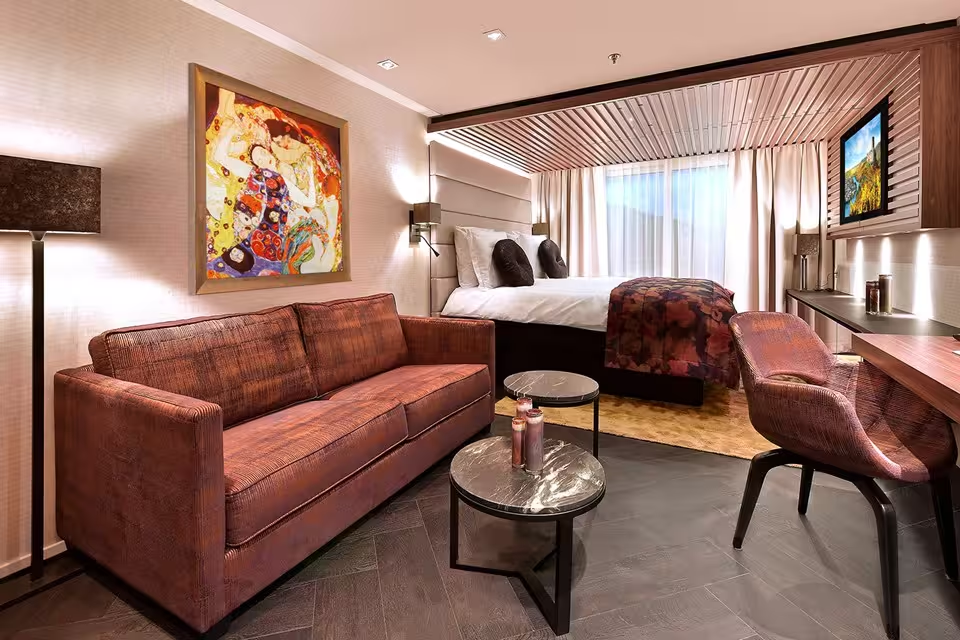
AmaWaterways’ ships are designed for river cruising, with accommodation, dining and public spaces intended to make the vessel an integral part of the holiday. When a sister-ship transfer is arranged, the intention is to maintain continuity wherever possible.
The replacement vessel may be a sister ship, but travelers should not assume that every feature, cabin detail or onboard facility will be identical. The exact arrangements depend on the ships involved.
Similarly, an alternative itinerary may change the balance between time spent sailing and time spent exploring on land. A day originally planned around a scenic river passage could instead involve a coach journey or a longer stay in a city.
This is where realistic expectations matter. The appeal of river cruising lies in both the destinations and the journey between them, and a disruption can affect either element.
AmaWaterways’ contingency planning aims to preserve the holiday as far as circumstances allow, rather than guarantee an unchanged experience.
The measure of a successful response is not whether nothing changes, but whether the revised arrangements are safe, workable and communicated clearly to guests.
Communication: What Guests Should Expect Before and During a Cruise
Clear communication is particularly valuable when conditions can change quickly.
AmaWaterways’ published guidance for affected European sailings states that guests will be contacted individually about relevant itinerary adjustments. Its October 2026 guidance also described updates being provided to guests and travel advisers, with information available through its travel-update pages.
Once onboard, the Cruise Manager and the cruise line’s communication channels help keep guests informed about changes to the daily program.
For travelers who have already booked, the most useful step is to monitor official travel updates and read any departure-specific communications carefully. Where an adjustment has been announced, confirm how it affects embarkation, transfers, excursions and the overall itinerary.
Guests should also consider their wider travel arrangements. If they are flying into the embarkation city, allowing a comfortable margin before the cruise departs can help reduce the risk of a delayed flight affecting the holiday. Travel insurance should be reviewed carefully for the cover it provides for relevant disruptions, delays and additional expenses.
These are sensible precautions for river cruising generally, not a reason to assume that a particular departure will be affected.
Does This Mean You Should Avoid River Cruising in Certain Seasons?
Not necessarily.
Different seasons offer different attractions. Spring brings fresh greenery and gardens, summer offers long daylight hours, and autumn can be especially appealing for vineyard landscapes and harvest-season scenery.
Water levels vary with local conditions, and no particular month can guarantee trouble-free navigation. While seasonal patterns can inform a discussion about timing, they cannot reliably predict the conditions on a specific sailing.
The better approach is to consider the itinerary as a whole: the destinations you most want to visit, the time of year that suits you, the length of the journey and how comfortable you feel with the possibility of operational adjustments.
If your priority is a particular event or a specific port, ask how important that stop is to your plans and what the booking terms say about itinerary changes. If flexibility is more appealing, a journey with several destinations may still offer considerable value even if the sequence or transport arrangements change.
A river cruise remains a distinctive way to experience Europe’s cultural capitals and smaller historic towns. The key is to understand that the river itself is part of the equation.
Planning Your AmaWaterways River Cruise With Confidence
The behind-the-scenes work involved in managing river conditions rarely features in the brochure photographs, yet it is an important part of operating a river cruise.
Ship swaps, alternative transfers and revised itineraries require coordination across vessels, ports and transport providers. These measures can help keep a holiday moving, but they cannot eliminate every consequence of changing water levels.
When planning your journey, it is worth understanding the possibility of itinerary changes and considering which destinations matter most to you.
Whether you are drawn to the grand capitals of the Danube, the castles and vineyards of the Rhine, or a longer journey through Europe’s waterways, AmaWaterways offers a variety of routes to explore.
Call us at 888-717-5074 to speak with our luxury cruise specialists about AmaWaterways river cruises. We can help you compare itineraries, consider the best timing for your trip and choose a journey that suits your interests and travel plans. We’ll also help you understand the details of your chosen sailing as you plan your holiday with us.
Book Your Amawaterways Cruise
Frequently Asked Questions (FAQs)
Q: What happens if water levels are too low on an AmaWaterways river cruise?
A: AmaWaterways monitors conditions and may adjust docking locations, excursions, transfers, ship schedules or itineraries. In certain circumstances, a sister-ship swap or coach transfer may be arranged. The response depends on the affected sailing and the conditions at the time.
Q: What is an AmaWaterways ship swap?
A: A ship swap involves guests transferring between vessels, often sister ships, when a section of river cannot be navigated safely. Where operationally feasible, the vessels may approach the affected section from opposite directions, allowing guests to continue their journey on another ship.
Q: Can high water levels also affect river cruises?
A: Yes. High water can affect navigation, bridge clearances, locks and access to docking facilities. The appropriate response depends on local conditions and may include changes to the itinerary or operating arrangements.
Q: Will AmaWaterways cancel a cruise because of low water?
A: AmaWaterways has described using contingency plans to adapt affected sailings where possible. However, no cruise line can guarantee that every departure will operate as originally scheduled. Significant conditions may require more substantial changes, so consult the official travel updates and the terms applicable to your booking.
Q: How will I know if my AmaWaterways cruise is affected?
A: Check AmaWaterways’ official travel updates and monitor communications from the cruise line and your travel adviser. Guests on affected departures are contacted individually, according to its published guidance.
