

There is a particular kind of traveler who no longer needs convincing about luxury.
They have stayed in the grand hotels, travelled through Europe by rail, taken long-haul journeys, perhaps crossed an ocean more than once. They know that an expensive holiday does not automatically make for a memorable one. And after enough travelling, certain things become surprisingly clear: the size of the ship matters, the itinerary matters, the pace matters, and having choices without being overwhelmed matters even more.
That helps explain the enduring appeal of Oceania Cruises.
Rather than relying on spectacle, Oceania has built its reputation around the details that become increasingly important with experience: destination-rich itineraries, smaller ships, included specialty dining, attentive service and an atmosphere designed for adults. Its current program spans more than 600 destinations, with voyages ranging from seven to 180 days.
For the experienced traveler, that combination can be rather persuasive.



Why Experienced Travelers Keep Coming Back to Oceania
One of the easiest ways to recognize an experienced traveler is by the questions they ask.
Not How big is the pool? but How long are we actually staying in Venice?
Not How many restaurants are there? but Where does the itinerary take us?
Oceania’s destination focus is central to its appeal. The line currently sails to more than 600 destinations, and many itineraries include late-evening departures or overnight stays, giving travelers more time ashore.
Its recently announced 2028 and 2029 collection illustrates the approach particularly well. It contains more than 230 voyages and more than 60 overnight stays, with itineraries reaching from familiar cities such as Tokyo, Amsterdam and New York to smaller ports including Ishigaki and Miyazaki in Japan.
That distinction matters.
An overnight in Lisbon is a different proposition from sailing into the city in the morning and leaving before dinner. Extra time in Bangkok can change the rhythm completely. And a visit to Japan that includes smaller coastal ports alongside Tokyo and Osaka offers a rather different perspective from an itinerary built exclusively around the country’s headline destinations.
For seasoned travelers, the attraction is often not seeing more places. It is seeing them with a little more time.
The Ships Are Deliberately Manageable
There is also something to be said for knowing what you don’t want.
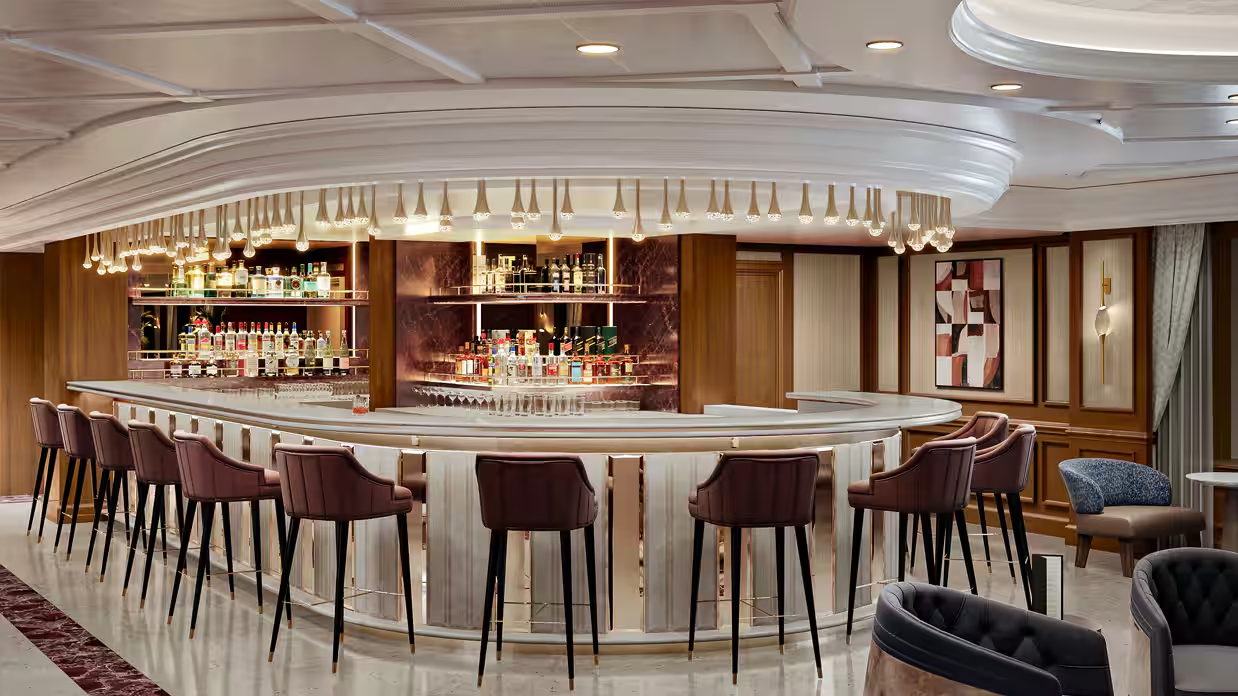
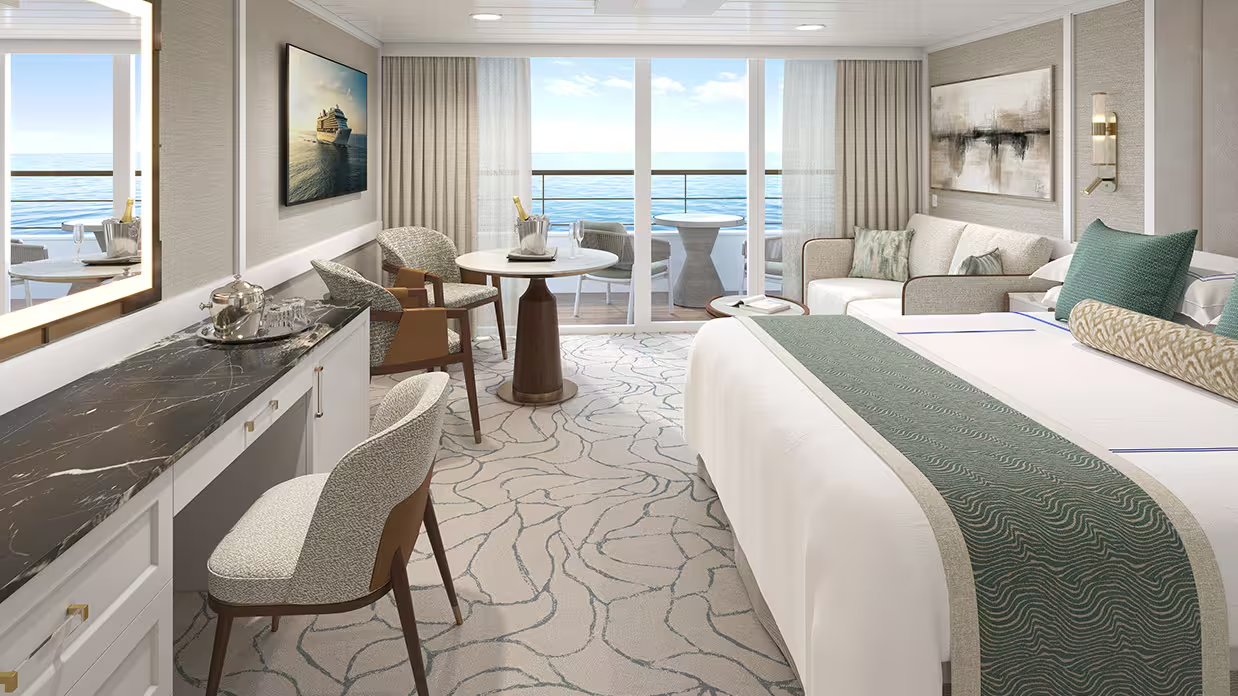
After experiencing enormous resort-style ships, some travelers find themselves drawn back towards something quieter. Oceania’s ships accommodate no more than 695 rooms and suites, according to the line, creating a smaller-scale environment than many of the largest contemporary cruise ships.
That smaller scale affects the rhythm of a voyage.
There are fewer acres of ship to navigate and less sense that you need to plan your day around crowds. The atmosphere is adults-only, and Oceania describes its onboard environment as relaxed and elegant rather than resort-like.
It is a subtle form of luxury.
The ship does not constantly need to remind you that you are on holiday. Instead, it provides a comfortable base from which the destinations become the main event.
For someone who has travelled extensively, that can be precisely the point.
Choice Becomes More Valuable With Experience
The longer you travel, the more individual your preferences tend to become.
Perhaps you would rather spend an afternoon in a museum than take another panoramic sightseeing tour. Perhaps you want a leisurely lunch and an evening in port. Perhaps you have become fascinated by Japanese ceramics, Mediterranean architecture or the history of the Silk Road.
Oceania’s evolving enrichment program reflects this more individual approach.
Beginning in 2027, every sailing is scheduled to feature an enrichment speaker specializing in heritage, culture or history. Voyages of 12 days or longer are also planned to feature a second special-interest speaker, with subjects extending into areas such as astronomy, technology, AI, health and longevity. Selected voyages with three or more sea days may also offer American Mah Jongg or American Contract Bridge League-accredited bridge programming.
There is a useful distinction here.
Enrichment works best when it complements the journey rather than filling time simply because a ship has sea days. A talk about the history of Japan before arriving in Kagoshima, for example, has a different relevance from a generic lecture delivered anywhere in the world.
That sense of connection between the ship and the destination is very much part of Oceania’s proposition.
And Then There Is the Food
Experienced travelers tend to become quite particular about dining.
Not necessarily because they expect theatrical menus every evening, but because after enough restaurant meals around the world, consistency becomes noticeable.
Oceania’s culinary reputation remains one of the foundations of its brand. The line includes specialty restaurants within the cruise fare, and its current positioning continues to place cuisine alongside destinations and hospitality as one of its defining pillars.
For the traveler who has spent time in Italy, France, Japan or Spain, food can also become part of the destination story rather than a separate onboard attraction.
A Mediterranean itinerary through Greece and Turkey, for instance, is naturally enhanced by an interest in the region’s culinary traditions. The same applies to a voyage through Southeast Asia or Japan.
It is less about making every meal an occasion and more about having the confidence that dining is an important part of the journey.
Longer Voyages Make More Sense
There is another reason experienced travelers keep returning to the cruise format: they become increasingly aware of how much time conventional travel can consume.
Flights. Transfers. Hotel check-ins. Packing. Unpacking. Checking out.
Oceania’s longer itineraries offer another model.
The line’s current program includes journeys from seven to 180 days, while Oceania Aurelia is scheduled to operate 180-day Around the World voyages in 2028 and 2029. The ship is designed specifically for extended global travel and is expected to accommodate fewer than 500 guests.
And for travelers who like the idea of a longer journey but cannot disappear for six months, Oceania has introduced shorter segments of Aurelia’s inaugural 180-day world voyage. Twelve segments range from 10 to 19 days, including journeys between Los Angeles and Papeete, Sydney and Bali, and Taipei and Tokyo.
That is an interesting development because it makes the idea of world cruising considerably more flexible.
You can experience a chapter rather than committing to the entire book.
Familiarity Without Sameness
Perhaps the most interesting reason people return to a cruise line is that familiarity does not necessarily mean repetition.
A returning Oceania guest might choose the Mediterranean one year and Japan the next. They might take a seven-day voyage rather than a three-week journey. They might return to a favorite region but choose an itinerary that includes ports they have never visited.
The 2028 and 2029 collection, for example, includes Japan’s Ishigaki and Miyazaki alongside Tokyo and Osaka, as well as destinations such as Iceland’s Húsavík and Alaska’s Icy Strait Point.
That variety gives experienced travelers room to become repeat guests without becoming repetitive travelers.
And that may be the real secret.
The Experience Can Keep Evolving
Oceania is also continuing to introduce new ways of using time at sea.
Its Curated Conversations series, launching on selected 2027 sailings, brings influential figures from technology, film, culture and the arts onboard for interview-style conversations. Announced participants include Steve Wozniak aboard Oceania Allura and Karen Allen aboard Oceania Vista, although programming remains subject to change.
It is another example of how the definition of a luxury cruise is becoming less about accumulation and more about relevance.
For an experienced traveler, the best experience is rarely the one with the longest list of features. It is the one where the pieces make sense together.
A well-chosen itinerary. A manageable ship. Time in the right places. Interesting things to do between ports. Good food. And enough flexibility to make the journey feel personal.
That is where Oceania continues to make its case.
Not by trying to be everything to everyone, but by creating a particular style of travel that rewards curiosity.
And once you know what you like, that can be a very compelling reason to come back.
If you already know what you like about luxury travel — and perhaps what you don’t — choosing the right Oceania itinerary becomes much more interesting.
Call us at 888-717-5074 to discuss Oceania Cruises, explore the itineraries and find a journey that fits the way you want to travel.
Book Your Oceania Cruise
Frequently Asked Questions (FAQs)
Q: Why do experienced travelers choose Oceania Cruises?
A: Oceania combines destination-rich itineraries, smaller ships, an adults-only environment, included specialty dining and personalized service. Its itineraries currently span more than 600 destinations.
Q: Is Oceania Cruises suitable for repeat cruisers?
A: Yes. Its extensive range of itineraries means returning guests can explore different regions, ship experiences and voyage lengths rather than simply repeating the same type of cruise.
Q: Does Oceania visit smaller destinations?
A: Yes. Oceania’s current itineraries include smaller and less frequently visited ports alongside major cities. Its 2028–2029 collection includes Japanese ports such as Ishigaki and Miyazaki, as well as destinations including Húsavík in Iceland and Icy Strait Point in Alaska.
Q: Are Oceania Cruises adults-only?
A: Yes. Oceania currently describes its cruise environment as adults-only.
Q: Does Oceania offer longer cruises?
A: Yes. Current itineraries range from seven to 180 days, including planned 180-day Around the World voyages aboard Oceania Aurelia.
