

On a luxury cruise, dinner can easily become part of the daily rhythm: return from a day in Barcelona, change for the evening, take an aperitif and settle into the main restaurant. But on Silversea, that is only one part of the culinary story.
The line’s dining scene has grown into something much more varied, with restaurants, destination-inspired menus, intimate tasting experiences and even hands-on cooking sessions. On newer ships such as Silver Nova and Silver Ray, the choice is particularly broad, while the S.A.L.T. program has added another dimension by connecting food on board with the places being visited.
That makes dining less about simply deciding where to eat tonight and more about deciding how you want to experience the destination.
Beyond the idea of a main restaurant
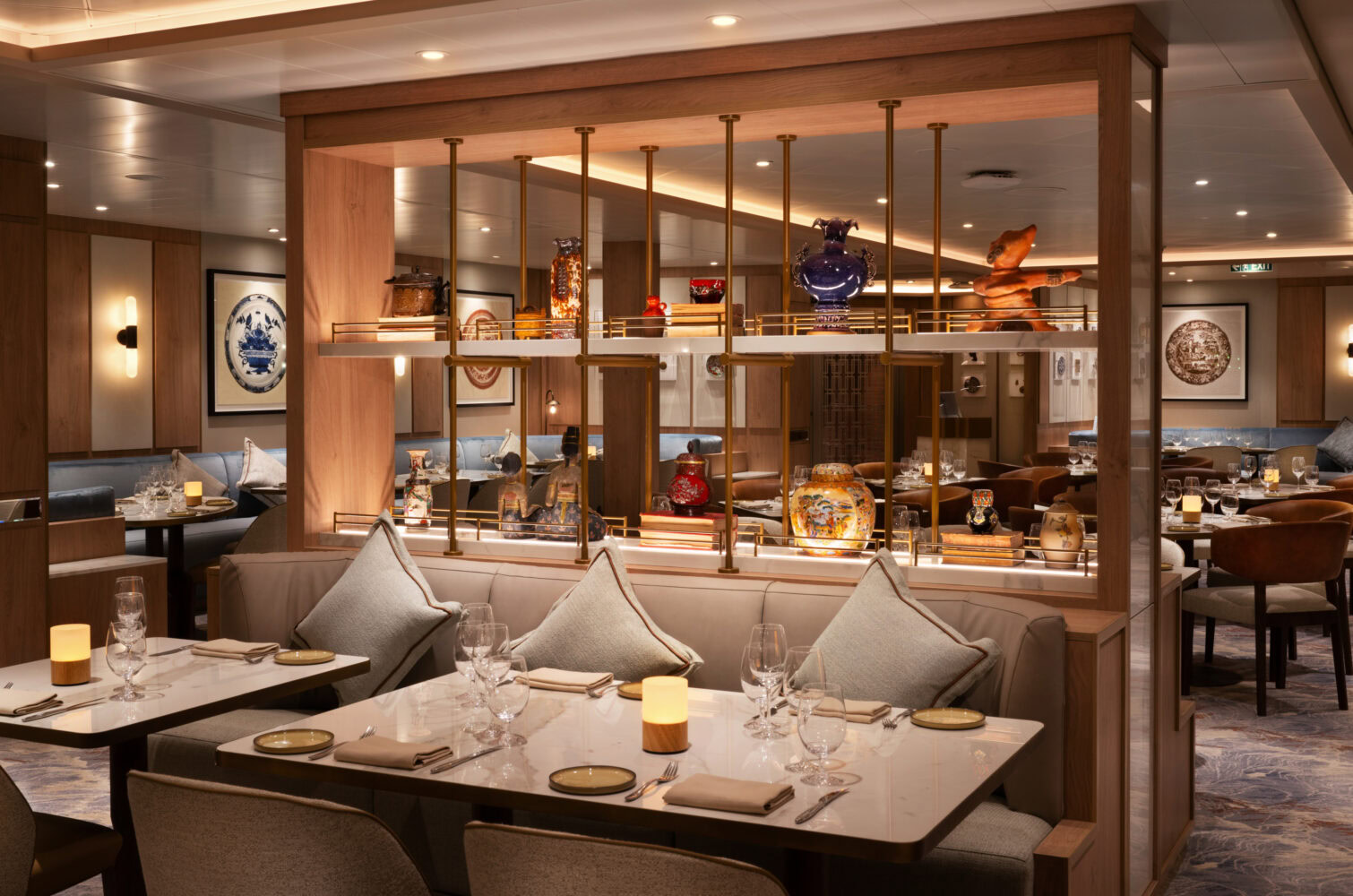
Silversea’s signature restaurants remain an important part of the experience. Atlantide, for example, offers refined international cuisine and grilled classics, with à la carte breakfast, lunch and dinner. It is the sort of restaurant that works beautifully when you want dinner to feel elegant without necessarily turning it into a formal tasting-menu occasion.
But the appeal of Silversea’s culinary offering is the ability to change the mood.
One evening might call for Italian food and a bottle of wine. Another might suit Japanese cuisine. On another night, a smaller meal accompanied by live music could be exactly right.
That flexibility is particularly noticeable on ships with a wider range of venues. Silver Ray, for instance, currently lists 11 restaurants and dining venues, including S.A.L.T. Kitchen, La Terrazza, La Dame, Kaiseki, Silver Note, Spaccanapoli and The Grill.
The important point is that not every Silversea ship has the same collection of restaurants, so the culinary possibilities depend on the ship and itinerary.
S.A.L.T.: when the destination comes to dinner
Perhaps the most distinctive element of Silversea’s contemporary culinary offering is S.A.L.T., short for Sea and Land Taste.
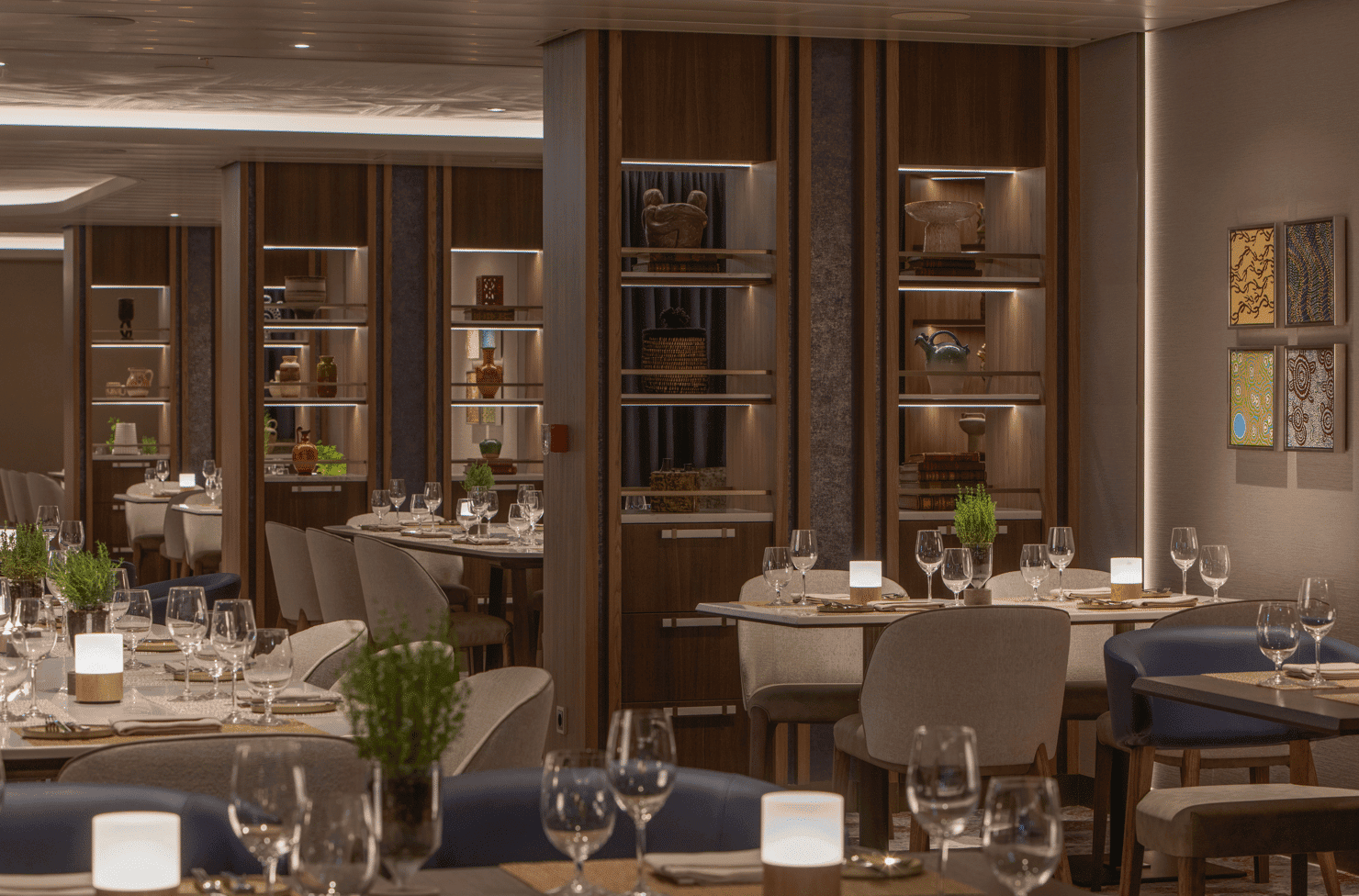
The concept takes the cuisine of the destinations being visited and brings it into the ship’s culinary program. The centerpiece is S.A.L.T. Kitchen, where menus change according to the region and itinerary rather than remaining identical throughout the voyage.
Silversea describes the restaurant as offering an ever-changing destination-inspired menu alongside broader regional and hyperlocal dishes. On the current S.A.L.T. Kitchen program, the experience also includes a selection of more than 160 regional wines.
It changes the way you might think about a sea day.
Imagine sailing between ports in Sicily and mainland Italy while the evening’s menu explores local flavors, or travelling through the Mediterranean and encountering dishes that reflect the regions around you. Instead of the destination disappearing when you return to the ship, it remains present at the table.
For travelers who choose cruises partly for their cultural immersion, that connection can be as interesting as another shore excursion.
La Terrazza: an Italian classic with two personalities
La Terrazza demonstrates another side of Silversea dining.
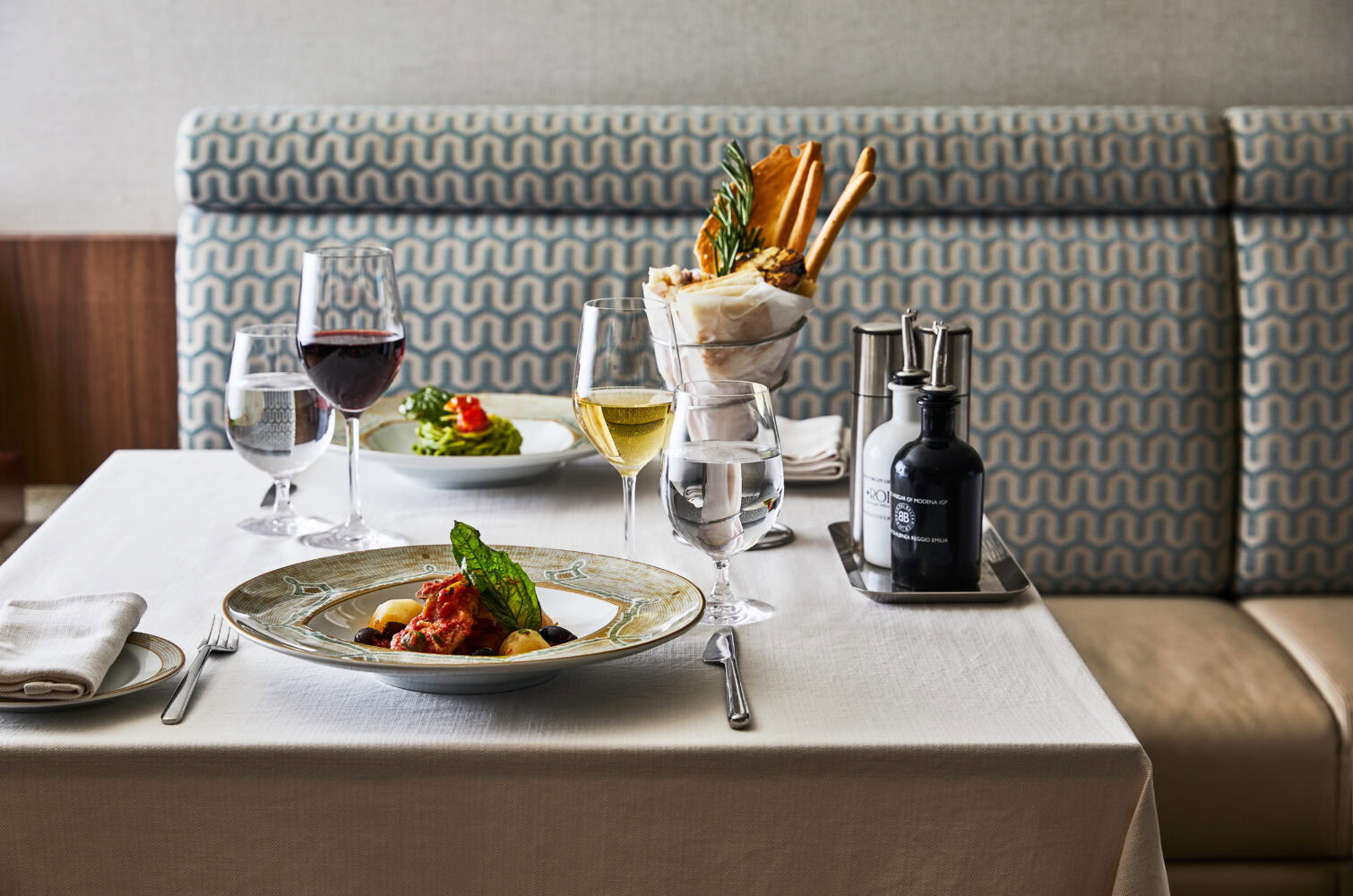
During the day, it operates as a more relaxed setting, with breakfast and lunch buffets and live cooking stations. In the evening, it becomes an Italian restaurant, with handmade pasta, seafood and wines. Dinner reservations are required.
That transition is part of its charm.
At lunchtime, you might be coming straight from the pool or returning from exploring Dubrovnik. Later, the same space takes on a distinctly different character for dinner.
There is also something wonderfully uncomplicated about Italian food at sea. Pasta, seafood and wine do not need much explanation. When the ingredients are treated properly, the pleasure is in the simplicity.
La Dame for a more formal evening
For occasions when dinner itself is the event, La Dame offers a different experience.
The French restaurant focuses on tasting menus, seasonal ingredients and contemporary technique. It is a more elaborate proposition than simply choosing something from an à la carte menu, making it suited to an evening when you want to linger over several courses rather than eat between other plans.
It also illustrates something important about modern luxury cruising: variety does not necessarily mean informality.
A ship can offer relaxed dining by the pool one afternoon and a sophisticated multi-course dinner that evening, without either feeling out of place.
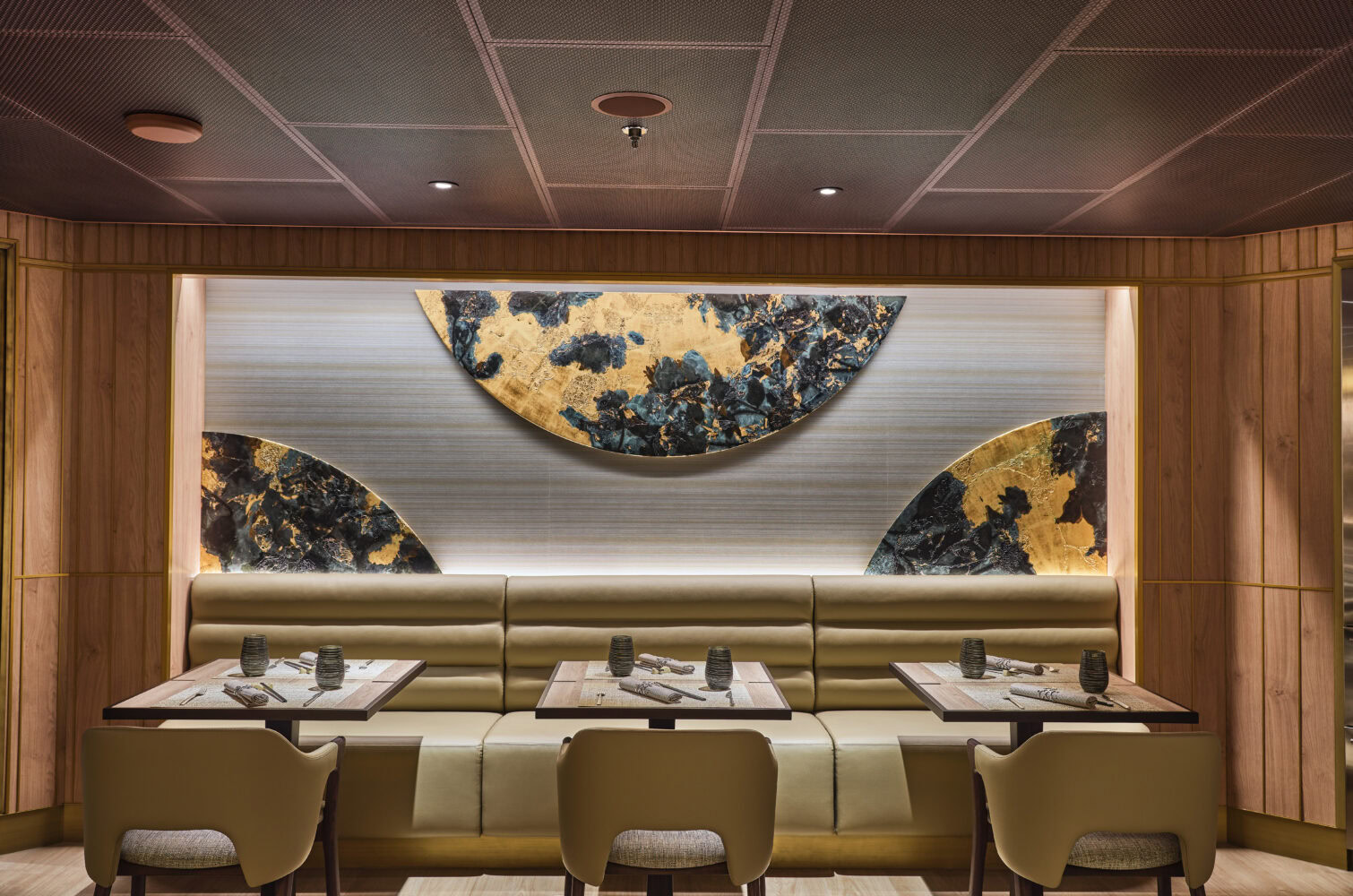
Kaiseki brings Japan to sea
On ships where it is available, Kaiseki takes the culinary journey in another direction.
The restaurant serves sushi and sashimi during the day, while dinner moves towards Japanese specialties including miso black cod and wagyu teriyaki. Silversea describes the cuisine as reflecting the Japanese principles of balance and precision.
For an itinerary visiting Japan, that connection feels particularly natural. But it can also provide a welcome change of pace on a completely different voyage.
Luxury cruising is, after all, partly about having choices. You do not necessarily want every meal to reflect the cuisine of the country outside the window. Sometimes you want to stay with the destination; sometimes you want to travel somewhere else entirely for dinner.
When dinner becomes entertainment
Then there is Silver Note, which takes the supper-club idea to sea.
Here, small plates are paired with live jazz and an evening atmosphere that is quite different from a conventional restaurant.
It is a reminder that dining does not have to be separated from the rest of the evening.
You can have dinner, listen to music and stay for another drink without having to move from one venue to another. On a luxury cruise, where the pace is deliberately unhurried, that kind of continuity can be rather appealing.
For those who prefer their evenings quieter, other venues provide a completely different rhythm.
Pizza, grilled seafood and dining outdoors
Not every meal needs to be an occasion.
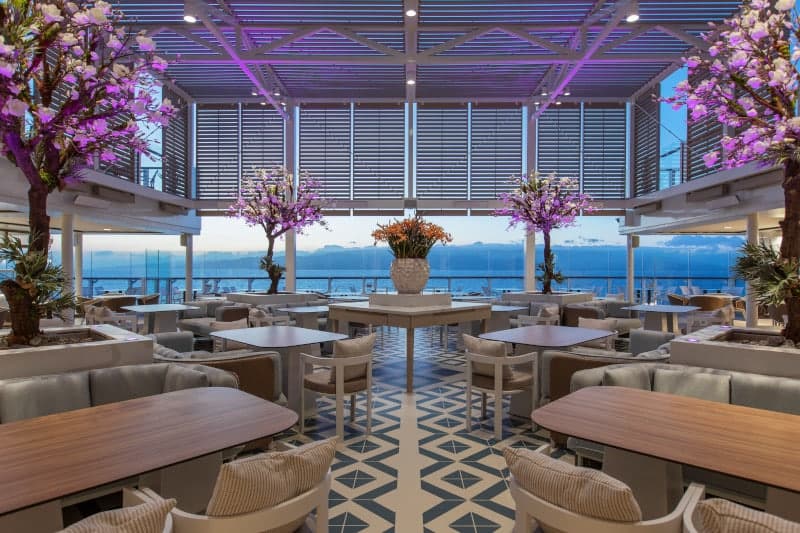
On Silver Nova and Silver Ray, The Marquee combines open-air dining with access to favorites from Spaccanapoli and The Grill. Spaccanapoli focuses on Neapolitan-style pizza, while The Grill serves salads, grilled seafood and steaks.
That matters because one of the pleasures of a luxury cruise is being able to decide that lunch should be wonderfully uncomplicated.
After a morning in Mykonos, perhaps the last thing you want is a lengthy lunch. A pizza eaten outdoors, or something from the grill overlooking the sea, can feel exactly right.
Luxury is not necessarily about making every experience elaborate. Sometimes it is about having the freedom to choose.
The culinary experience can continue beyond the restaurant
Silversea’s culinary program also extends beyond simply sitting down to eat.
The S.A.L.T. program includes S.A.L.T. Lab, where guests can take part in complimentary hands-on cooking classes exploring local techniques and traditions. On Silver Ray, S.A.L.T. Lab also becomes the setting for the S.A.L.T. Chef’s Table, an intimate 11-course experience built around local ingredients.
This is perhaps where Silversea’s approach becomes most interesting.
A cooking class is not simply another meal. It asks you to engage with the food differently. You learn something about a technique, ingredient or culinary tradition, then carry that knowledge with you.
And a chef’s table reverses the usual relationship between guest and restaurant. Instead of choosing from a menu and waiting for the courses to arrive, the meal becomes a carefully choreographed experience in its own right.
A more personal approach to cruise dining
The real luxury of Silversea’s culinary offering may therefore be less about the number of restaurants than the choice it creates.
You can have a traditional dinner at Atlantide. You can follow the destination through S.A.L.T. Kitchen. You can settle into Italian cuisine at La Terrazza, choose French fine dining at La Dame, explore Japanese flavours at Kaiseki or combine small plates and jazz at Silver Note.
And then there are the simpler pleasures: pizza, grilled seafood, coffee and pastries, or lunch in the open air.
For a cruise visiting somewhere like Athens, Barcelona, Istanbul or Japan, that variety can make the ship feel like part of the destination rather than simply the place you sleep between ports.
The result is a culinary experience that rewards curiosity without requiring every meal to be treated as a grand event.
Sometimes the most memorable dinner may be the elaborate one. Sometimes it may simply be a perfectly made pizza while the sun goes down.
On Silversea, you can decide for yourself.
The dining options can vary considerably between Silversea ships, so choosing the right vessel and itinerary can make a real difference to the overall experience.
Call us at 888-717-5074 to discuss Silversea itineraries and find the journey that fits your travel plans.
Book Your Silversea Cruise
Frequently Asked Questions (FAQs)
Q: Does Silversea have specialty restaurants?
A: Yes. Depending on the ship, dining can include venues such as La Terrazza, La Dame, Kaiseki, S.A.L.T. Kitchen, Silver Note, Spaccanapoli and The Grill. Restaurant availability varies by ship.
Q: What is S.A.L.T. on Silversea?
A: S.A.L.T. — Sea and Land Taste — is Silversea’s culinary programme connecting the food served on board with the destinations visited. S.A.L.T. Kitchen features destination-inspired menus, while S.A.L.T. Lab offers hands-on culinary experiences.
Q: Is La Terrazza included on Silversea?
A: La Terrazza is available on a number of Silversea ships and offers breakfast and lunch during the day before becoming an Italian restaurant for dinner. Specific venues and schedules vary by ship.
Q: Does Silversea offer Japanese food?
A: Yes, on ships featuring Kaiseki. The restaurant serves sushi and sashimi during the day and Japanese specialties at dinner.
Q: Does Silversea offer cooking classes?
A: S.A.L.T. Lab offers complimentary hands-on cooking classes focused on local techniques and traditions. Availability is dependent on the ship and itinerary.
